Lowman Bridge Friction Collar & Formwork for the Pier Cap
Lowman, ID
Client: American Construction Supply
Structural: Plan North Engineers
Contractor: Knife River
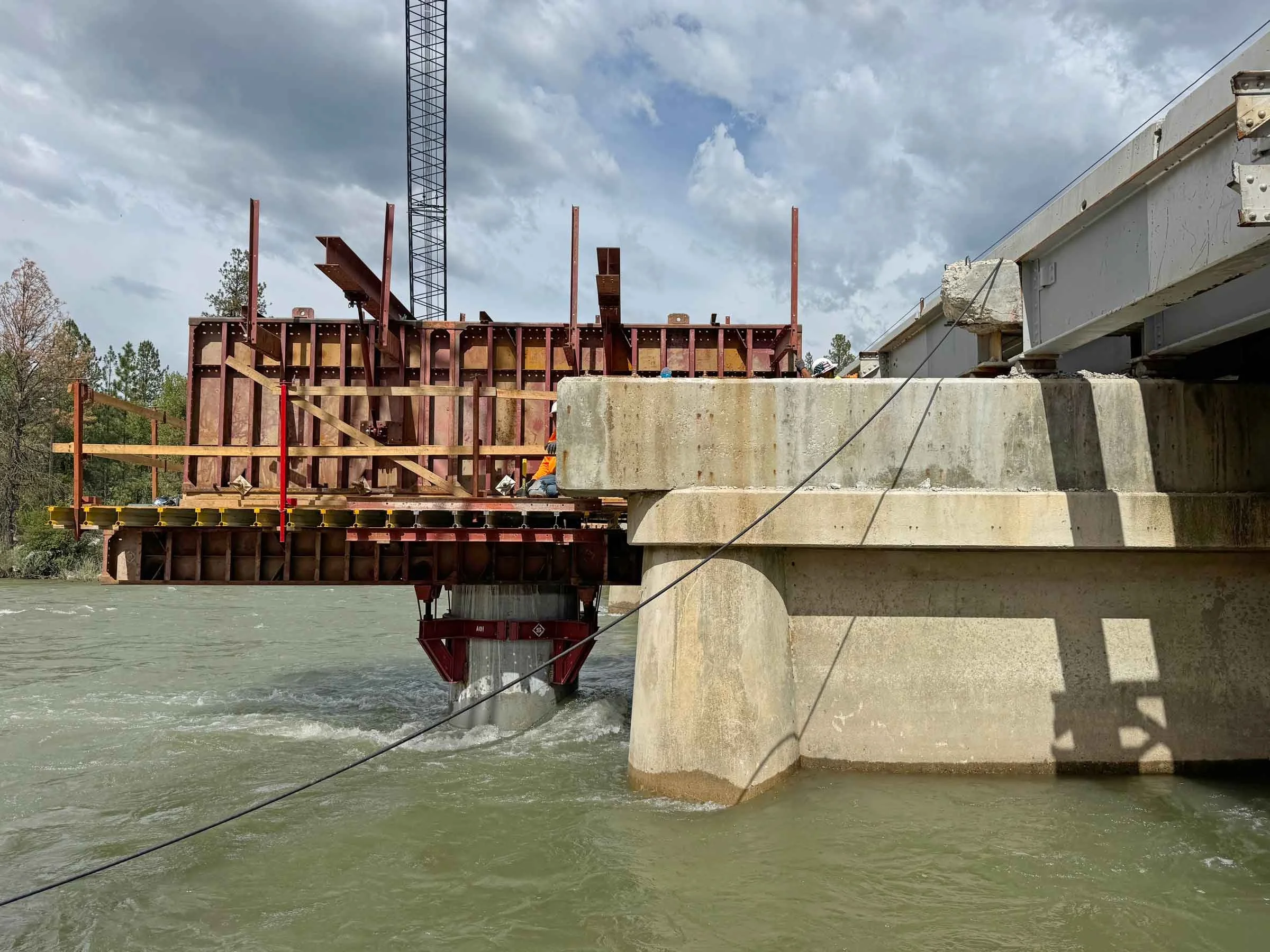
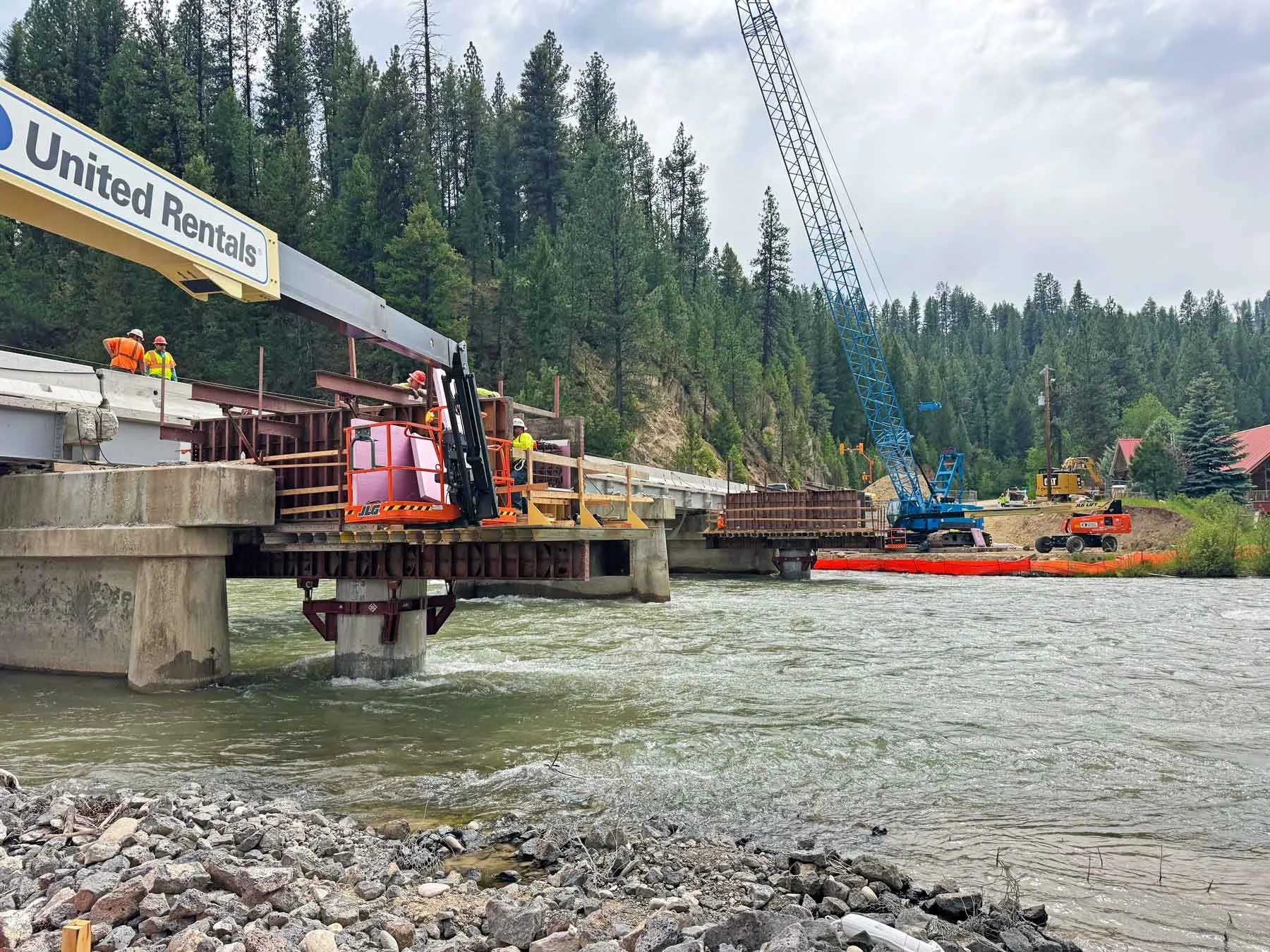
When the Idaho Transportation Department (ITD) began plans to replace the SH-21 Lowman Bridge crossing the South Fork of the Payette River, they faced a unique set of challenges. The aging steel girder bridge, originally built in 1946, was to be replaced with a new 250-foot structure that had to take into account the river's bull trout spawning habitat, which restricts in-water work during certain times of year. During construction, the team encountered unexpected conditions that left the decking too narrow to proceed with the original plan, requiring a retrofit. With environmental restrictions preventing additional in-water activities and liquidated damages tied to the completion date, American Construction brought Plan North onto the project to engineer and refine a proposed solution that would allow construction of the bridge's large hammerhead piers without further impacts to the river. After evaluating the proposed approach, Plan North engineered a modified friction collar system for the steel-cased piles, refining the concept as necessary to provide a safe working platform entirely above the water. Rather than relying solely on a high-friction fit typical of conventional friction collar systems, the engineered solution incorporated welded connections to fabricated supports, reducing the risk of collar slippage and avoiding the need for extremely tight installation tolerances.
Plan North also engineered the formwork and falsework for the bridge piers, supporting construction of the distinctive hammerhead geometry. Throughout the process, Plan North worked directly with ITD, Knife River, American Construction, and Dayton Superior to address design, constructability, and approval requirements as efficiently as possible. By helping rapidly develop, coordinate, and engineer the proposed solution, Plan North helped expedite the approval and construction process, allowing the project to recover a portion of its lost schedule without requiring additional in-water work. The approach kept construction compliant with environmental restrictions while helping the project move back toward schedule and reduce exposure to liquidated damages.
Images by Plan North.